Help for Struggling Teenagers and Families


Damon regularly shares thoughtful, practical articles designed to support families navigating the complex teenage and young adult years. Drawing on real-world experience, psychology and residential work with young people, his writing offers clear insight into behaviour, mental health, motivation and family dynamics. These articles are written in a calm, accessible style, giving parents reassurance, perspective and practical steps they can apply immediately, whether they’re seeking early guidance or facing more challenging situations.
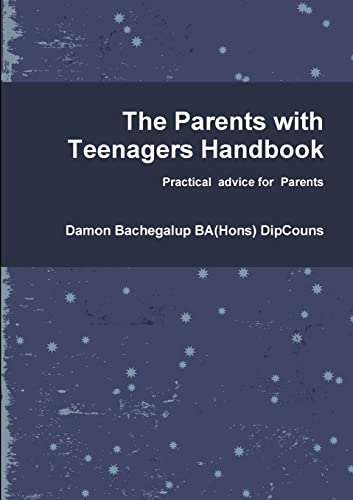
"The Parents With Teenagers Handbook".
Written by Damon, one of the UK’s leading teenage behavioural specialists with over 26 years’ experience, The Parents With Teenagers Handbook is a clear, practical guide for parents navigating the most challenging years of family life.
Damon has worked extensively with hard-to-engage, withdrawn and resistant teenagers as a behavioural therapist, mentor and mediator — often supporting families who feel stuck or out of options. Through researching behavioural and therapeutic programmes across the UK and Europe, he identified a crucial gap: parents lacked clear, effective guidance grounded in real-world experience.
That insight led to the creation of Teencamps-UK in 2008 — the UK’s specialist residential programme for teenagers, personally facilitated and counselled by Damon.
This book distils decades of frontline experience into calm, practical strategies parents can use immediately to improve communication, restore boundaries and reduce conflict — without blame, fear or jargon.
If you are parenting a teenager and need clarity, confidence and direction, this handbook is an essential place to start
When Traditional Approaches Are No Longer Working
When to Consider a Private 1:1 Residential for Your Teen
Families rarely arrive at the decision to explore a private 1:1 residential quickly. More often, it follows a prolonged period of trying to manage complex behaviour through familiar routes—school interventions, outpatient therapy, coaching, or changes within the home.
For many families, these approaches are effective. For others, despite care, commitment, and resources, they no longer produce meaningful or lasting change.
This is rarely a failure of parenting. More often, it reflects that the current environment can no longer provide the containment, structure, and emotional regulation a young person requires.
Early Indicators That a Different Approach May Be Needed
Families often enquire before a visible crisis. Common indicators include:
Escalating conflict or breakdown in communication
Emotional volatility, withdrawal, or risk-taking behaviour
Loss of parental authority or confidence
School refusal or disengagement from education
Home no longer functioning as a regulating environment
These patterns may develop gradually. While not always dramatic, they are often deeply disruptive to family life.
Why Private 1:1 Residential Support Is Different
A private 1:1 residential creates distance from entrenched dynamics while maintaining close, professional supervision. This is not punitive. It is a considered intervention designed to stabilise, reset, and restore clarity.
Unlike group residentials or camps, one-to-one residential work offers:
Continuous individual support without peer influence
Clear, consistent boundaries delivered by a single professional
A calm, structured setting that supports emotional regulation
Time to build trust and work at a pace suited to the individual
This level of focus is often what allows meaningful change to begin.
Assessment, Privacy, and Suitability
Private residential support is not appropriate for every young person or every family. A formal suitability assessment is essential to ensure safety, ethical practice, and realistic outcomes.
For families who require discretion, privacy, and a highly tailored approach, private 1:1 residentials offer an alternative to institutional or group-based models.
The Consultation Process
All placements begin with a private residential consultation. This allows for a calm, confidential discussion of your situation, an initial assessment of suitability, and guidance on next steps where appropriate.
For some families, the consultation provides clarity and reassurance. For others, it becomes the foundation for a more detailed assessment leading to residential support.
The aim is never urgency, but measured, professional decision-making in the best interests of the young person and the family.